• Skip to main content

Area 224 Ltd.

Content + Communications Consulting

  • Blog
  • Meet Dave
  • Services
You are here: Home / Archives for Dave

Dave

Dec 16 2025

Why An Eight-Minute Episode of Bluey Might Change Your Life

Okay, now that we have your attention…

High praise continues to be heaped upon one particular episode of the television show Bluey.

For instance: the website Romper says “Adults Are Obsessing…Because It’s Perfect.”

It’s a show for children, so folks like me — whose kids are no longer in the target demo for children’s programming — were likely to miss it. BUT…it’s THAT GOOD.

If you can roll everything about child-rearing, growing up, moving on, even grief into 8 Minutes?

It is rather amazing. If you haven’t seen it, you can watch it on YouTube.

Trust me, it might change your life.
Written by Dave · Categorized: December · Tagged: bluey, sleepytime

Dec 15 2025

Want to Own The Narrative? Own The Room.

Editor’s Note: This originally ran in June 2024 on this blog and on Substack.

Rewatching Global Financial Crisis Movies, and Replaying the Global Financial Crisis in Your Head

I am blessed to work with, and know, a pretty age-diverse crowd.

Which means a couple things: (1) I need to watch my “Cultural Literacy References” (e.g., talking about how great The Dennis Miller Show was, then punctuating an obscure witticism with “Cha-cha” may not be as over-the-target a zinger as I hoped); and (2) some “Historical References” might be lost completely.

Which brings us to the Global Financial Crisis.

If you missed it, you might have been too young, or it was something that wasn’t as relatively big in your world as it was in the epicenter of global finance.

The unofficial trilogy of the GFC is, in chronological order:

  1. The Big Short, which begins in 2005 and is based on a true story and derived from Michael Lewis’s book of the same name;
  2. Margin Call, which is set during the early part of the GFC (2007-2008) and, while fictitious, really wasn’t too far from the truth; it all takes place in around a 24-hour period;
  3. Too Big To Fail, which wraps everything up nicely and shows the beginning of the unraveling of companies like Lehman Brothers and AIG; it’s based on Andrew Ross Sorkin’s book of the same name (and the book’s title comes from the decision-making process that leads to that binary question that kinda keeps us all from another Depression: Is this particular bank “Too Big To Fail?”).

The Big Short has arguably one central character — Michael Burry, the guy who made the huge bet starting it all — and Too Big To Fail has several; I’ll argue that Margin Call has one central character: John Tuld, played by Jeremy Irons.

Watch This Scene

Even if you’ve seen the movie, I’ll suggest that, before proceeding, you watch (or rewatch; or, if you’re me, rewatch it for the 100th time) the scene here: the “Senior Partners Emergency Meeting.”

Own The Room Like John Tuld

While the scene marks a turning point in the movie, I’d hazard a guess that a good chunk of people had this scene — which is up there with Ned Beatty’s in Network and Alec Baldwin’s in Glengarry Glen Ross; links to both are below — serve as their introduction to the film. (Thanks, YouTube algorithm!) This is fine, because it also serves as the film’s introduction to Tuld.

This is a character that, until this point, we had not seen nor heard from.

But this is a character that would show us in just ten minutes not only who was in charge, but how to run a meeting. Here’s his playbook.

1. Don’t Call A Meeting Just Because

Sure, we get it, meetings are important. Regular team meetings, 1-on-1s, quarterly all-hands: these are part of corporate life. But Mr. Tuld is judicious with his time and is calling this meeting — At what appears to be 3:45 a.m.! With a dozen people! All wearing suits! — because he absolutely has to.

The meeting marks a decision point for the firm, and there is a necessity to it. He’s not meeting just to meet.

2. Every Meeting Should Have Either An Agenda…Or A Point

This meeting didn’t have a stated agenda, but, as we learn at the end, the meeting had a definite point: save the firm.

You could argue that the guy in charge can call a meeting whenever he (or she) wants to and gather everyone at 3:45 in the morning and he could do so without an agenda or a point. It’s a flimsy argument, though, as the person in charge cannot ascend to a position of importance if they call one agenda-free, point-free, 3:45 a.m. meeting. There will not be a second one of those meetings.

Tuld sets the agenda at the outset: this meeting is vital, he wans to get to the bottom of what’s in the report, and he wants to hear from the people who know how the firm got to this point.

If you’re asking whether this meeting could have been an email — which is a GREAT question to ask of any meeting — this meeting COULD NOT HAVE BEEN AN EMAIL.

3. He Involves the Subject Matter Experts…

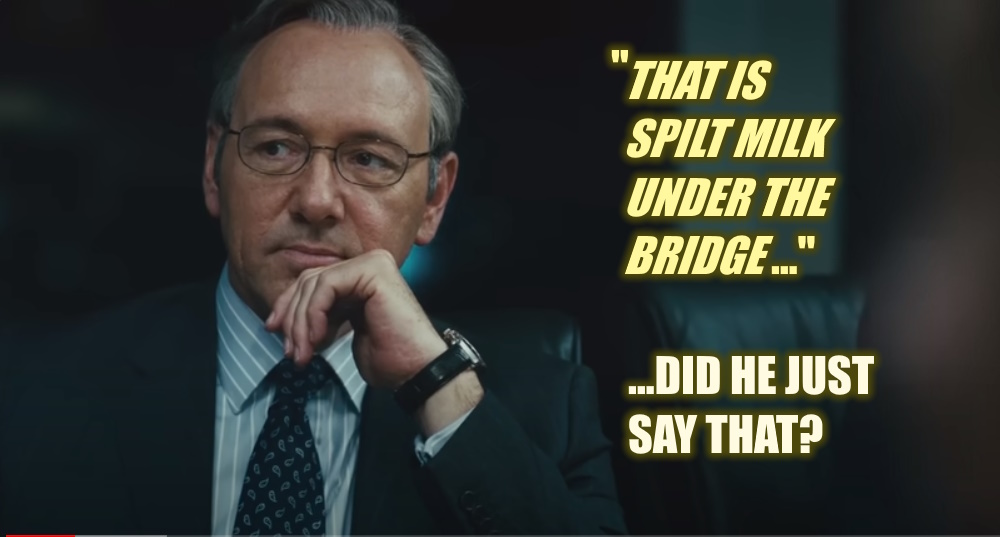
Tuld relaxes the group at the outset (see above); a likely deliberate mistake to both get everyone thinking (a) did he just say that? and (b) okay, if he can make a mistake like that, maybe there’s less pressure on me.

Since the team is now relaxed — as relaxed as one can be at this hour in what they have to know is the highest-stakes meeting they’ve ever been in — Tuld wants to hear from the expert: Peter Sullivan, played by Zachary Quinto.

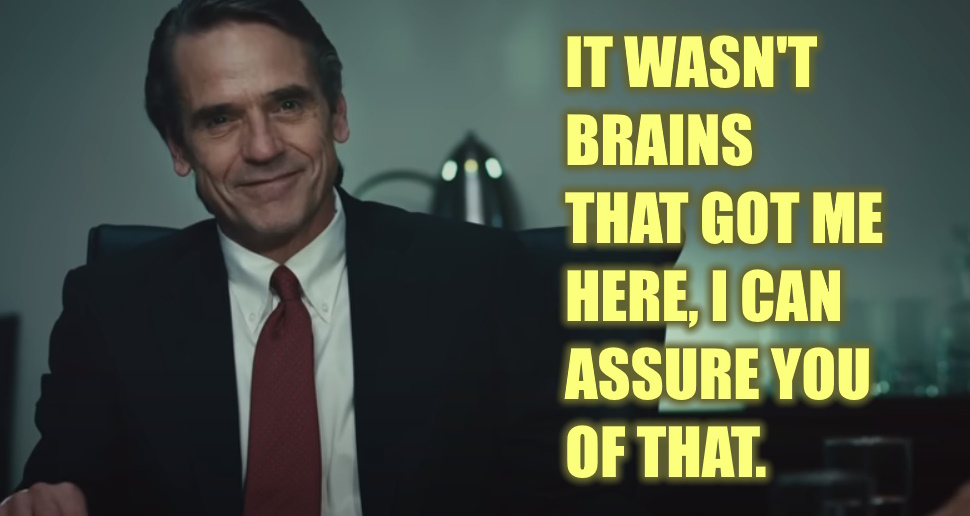
But, before Sullivan speaks, Tuld delivers another self-effacing line; this one is meant to get Sullivan as comfortable as possible:

Sullivan starts explaining the situation and Tuld — having already disarmed everyone TWICE — invites Sullivan to “just relax, stand up, tell us in a clear voice: what is the nature of the problem.”

Tuld has now given the limelight to a junior-level researcher, and he is keenly interested in what Sullivan has to say. Tuld is the one running the meeting, and Tuld does not have all the answers. Sullivan’s report — which was finished just hours earlier, and portends some really REALLY bad things happening to the firm — has caught his attention.

This is the sign of a leader who, in this case, has incomplete information and is looking to confirm that things are as bad as they are. He knows that Sullivan is the person who can put it in perspective. Or:

Tuld walked in thinking the firm had a 90% chance of being screwed. He needed Sullivan to confirm the other 10%.

So, he’s not afraid of sharing the spotlight. However, we used an ellipsis for number 3 above because…

4. …Not Everyone Is Included in the Discussion

You’ll notice that there are more than a dozen people in the room. You’ll also notice that nobody speaks unless called on. And you’ll notice half the people in the room DO NOT SPEAK AT ALL.

Sam Rogers, Kevin Spacey’s character, only speaks when he’s asked how they’d implement the plan; his back-and-forth with Tuld underscores their work history together, and he appears to be the only one who can challenge Tuld.

Other than that, Jared Cohen (played by Simon Baker) weighs in a little (more on that below) and Ramesh Shah (Aasif Mandvi) is very brief when suggesting the legalities of what they’re about to do.

But, in the days of “everyone has a voice!” and “we’re an inclusive culture!” it’s notable that most successful organizations aren’t running democracies: in this meeting, crisp is the way to go. We don’t need to hear from Steve in Accounting, and we don’t need a bunch of corporate-speak. We’re not running this up the flagpole; the flagpole is in the room.

5. Enjoy the Silence

One of the best parts of this scene starts at the 4:57 mark, when Tuld asks Sullivan “Do you care to know why I’m in this chair with you all, I mean why I earn the big bucks?” (Sullivan, of course, says yes.) We’ve queued it up below; watch the next minute.

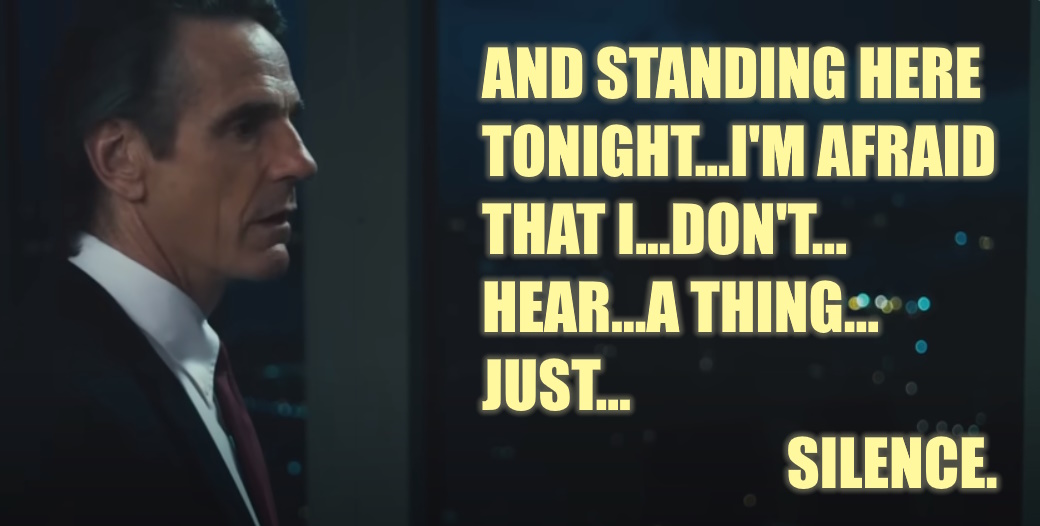
Tuld explains that he’s in that role “to predict what the music might do a week, a month, a year from now. That’s it. Nothing more.” Then…

The word “silence” is punctuated by 15 full seconds of…silence. No one fills the silence until John Tuld fills the silence.

6. Have A Decision Filter…AND USE IT

I mentioned above that Tuld had about a 90 percent inkling that things were wrong — that the music was slowing — and Sullivan’s report got him that last 10 percent — the music had stopped — and now we’re at the decision point. Tuld asks Jared what to do next, Jared pauses, and we get the line from the movie poster:

  • Be First
  • Be Smarter
  • Or Cheat.

Not just a clever marketing gimmick for the movie, this is the decision filter that Tuld had planned on using all along.

If you’re calling a meeting that has a decision to be made, you need to have a decision filter in mind. You need to know going in if there are plans of action that you can reasonably take.

(Funny enough, they do often come in threes like that; the old mantra from my startup days about whether or not to enter a new market often came down to choosing from one of these three:

  • Build (e.g., use your resources to create the solution yourselves)
  • Buy (find someone doing it and pay for their solution)
  • Or Partner (find someone doing it and join forces with them).)

Anyway, Tuld made his choice: Be First. They would get out of the MBS world, effectively killing the market in the process, and face the consequences.

What Can You Learn From All This?

Well, for starters, don’t call a 3:45 a.m. meeting unless you absolutely have to.

But, and again we know meetings are necessary, if you call the meeting, you’re best to begin at the finish line:

  • When this meeting is done, what will I have learned?
  • What decisions will my team need to make?
  • Who is responsible for the final decision?

Also, if the meeting could have been an email, by all means make it an email!

BTW…

Here, as promised, the Ned Beatty scene from Network:

And here’s Alec Baldwin’s speech in Glengarry Glen Ross:

Written by Dave · Categorized: Narrative · Tagged: jeremy irons, margin call

Dec 14 2025

An Hour Well Spent

Trying something new on this particular Sunday — as we continue our month of content — by sending you in the direction of two outstanding interviewers and one S-tier guest.

The interviewers: Konstantin Kisin and Francis Foster, co-hosts of the insanely popular Triggernometry podcast.

The guest: Eric Weinstein. Probably the most “practically brilliant” thinker out there. By practically brilliant, I mean:

  • YES he’s whip-smart
  • YES some of his ideas — and you’ll hear a lot of them during this hour-plus conversation — are out there
  • BUT there are practical applications to quite a bit of what he talks about.

For instance, at the end of the interview, there’s a really robust discussion about AI, where Eric says, in effect, “we are asking the wrong question.” The practically brilliant idea, which goes back to economic research, is to look at the tradeoffs — between human flourishing and machine-driven productivity — and incentivize the right part of the equation: the humans, not the machines.

The whole thing — aired a year ago, after Trump’s re-election — is not TOTALLY a political discussion; but it also sacrifices sacred cows on both sides of the political equation.

Like I said, practically brilliant. And Konstantin and Francis are really solid interviewers.

Enjoy.

Written by Dave · Categorized: Podcast · Tagged: eric weinstein, francis foster, konstantin kisin, triggernometry

Dec 12 2025

Every Year’s Top Song Since 2020

According to Dave, at least.

I’ve been blogging about all sorts of things for quite some time now, but the annual Top Songs list — which I’ve been doing both here and on Facebook and X — remains a personal favorite.

AND it’s fun to compare my lists to others, especially those who blog about music for a living.

In any event, let’s dive in with the top picks from each of the last six years; I’ll also rate each with “Staying Power” on a scale of 1 to 5; 5 means it still manages to maintain a certain level of coolness to me.

2020: The Districts, “Cheap Regrets”

Okay, I’m starting to think I’m the only one who has heard this song.

Not really, but, maybe the fact that this song’s video has only been viewed 195,000 times is telling me something.

Alas, Staying Power of 3/5. I still love it, and may still love it in a few years. But the rest of you have moved on (or never arrived in the first place).

2021: Glass Animals, “Space Ghost Coast to Coast”

Band: still at it. This song: still slaps. Staying Power: 5/5.

2022: Hemlocke Springs, “Girlfriend”

Turns out this song, which arrived near the end of 2022 and immediately shot up to the top of my list, launched a bit of a star. Staying Power Rating: 4/5.

2023: The Last Dinner Party, “Nothing Matters”

Yeah, considering the fact this band has gone beyond cult following, I’m giving this song a 5/5 for Staying Power.

2024: Mannequin Pussy, “Sometimes”

I listen to this song way too often. The band is cool enough to support Foo Fighters and Queens of the Stone Age on next year’s tour.

Staying Power: 5/5.

2025: Preoccupations, “Ill at Ease”

I’d give this a 6/5 for Staying Power if I could. I can’t give it a rating, though, since it’s from this year.

But if I could will the band to visit Chicago again…

Written by Dave · Categorized: Music, Top Ten Songs, TopSongs2025

Dec 11 2025

The Fifth Dentist and The Tenth Man

On reading the fine print, studying the scenarios, and thinking differently

A year ago, I was working on a project and started wondering about The Fifth Dentist. You know, from the gum commercials.

Ages ago, the idea took hold that “four out of five dentists recommend Trident,” a brand of sugarless chewing gum. Simple enough, right? A survey was conducted, dentists were asked about chewing gum, and, for some reason, Trident was the winner.

In fact, if you were to ask me what other brands of sugarless chewing gum are on the market, I don’t know what I’d say. I don’t give it much thought, I’ve accepted the claim at face value — Get it? Dentists? “Face” Value? — and I guess we’ve moved on.

But…not everybody has moved on. And you shouldn’t either.

Four Out of Five…

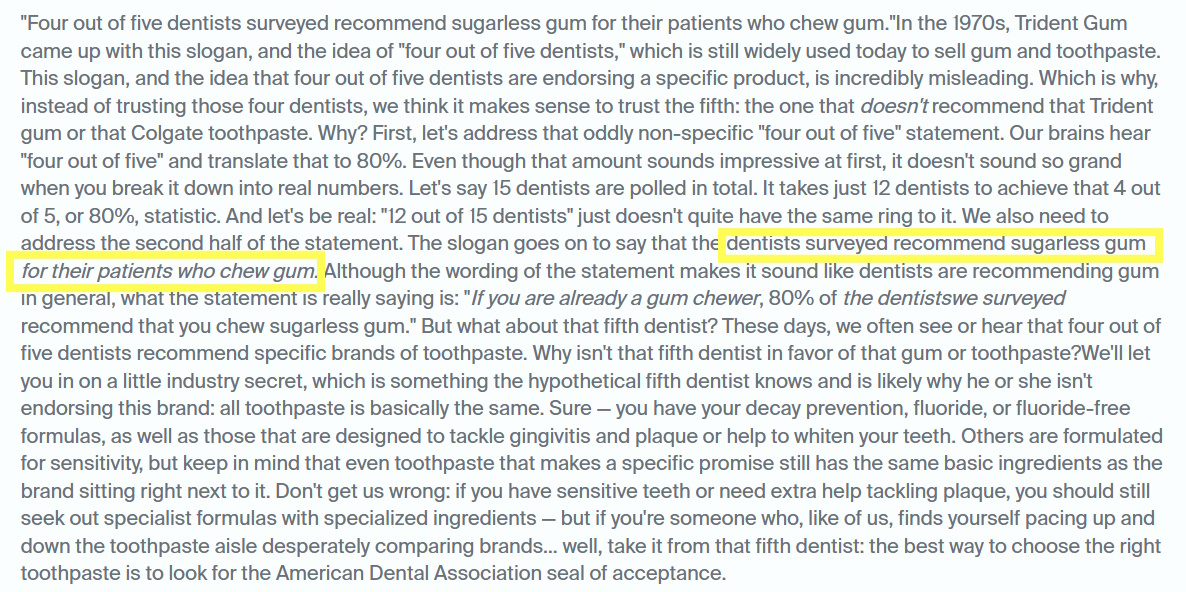
Yes, there’s a mini-screed over at a blog from Ideal Dental. Yes, they take it rather seriously. Yes, the claims are really misleading.

I highlighted the part that got me thinking — and the rest of it is a fun read, sure — and then I started looking into what Trident actually said. From Wikipedia:

The survey wasn’t about Trident, it was about the category of “Sugarless Gum.”

Which brings us to…

The Tenth Man

After a surprise attack by Arab forces led to the 1973 Yom Kippur War, the Israeli Army needed to come up with a system that would insure against overconfidence.

To put it simply, if nine people agreed on something, a tenth man needed to come up with an argument against the other nine.

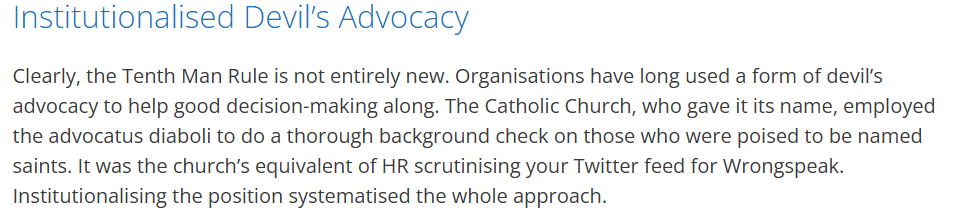
It’s “Institutionalized Devil’s Advocacy,” as Chris Meyer tells us over at The Mind Collective:

Are These Two Things Connected?

We’re in the age of “Narrative-driven Journalism” so we’re often looking for facts when all the other side is doing is aiming to be “Directionally Correct.” In the Trident example, you can draw a couple conclusions:

  • Trident is in the business of selling sugarless gum
  • Of course no dentist in their right mind would recommend a particular brand of gum
  • It’s a win for the Trident marketing team to get you to think about their brand as tangentially recommended by a bunch of dentists.

Cynical, maybe, but…true. Trident is happy to be directionally correct.

And yes, you can make a connection between Trident and The Tenth Man:

  • Everybody seems to have accepted the connection between Trident and four out of five dentists, but should they?
  • Why DIDN’T the Fifth Dentist “cave?”*
  • What reasons would there be for a dentist to recommend gum at all?

Your Thinking Can Evolve

Cynicism needn’t drive your every move in business and in life, but healthy skepticism is often warranted.

The contrarian viewpoint — be it from a fifth dentist or a tenth voice in an argument — can be your friend.

Oh, and the * above? Well, IYKYK.

Related Posts Plugin for WordPress, Blogger...

Written by Dave · Categorized: 2026, Thinking

  • « Go to Previous Page
  • Page 1
  • Interim pages omitted …
  • Page 3
  • Page 4
  • Page 5
  • Page 6
  • Page 7
  • Interim pages omitted …
  • Page 71
  • Go to Next Page »

Copyright © 2026 · Area 224 Ltd.