-
Is The Future of Work Less Social?
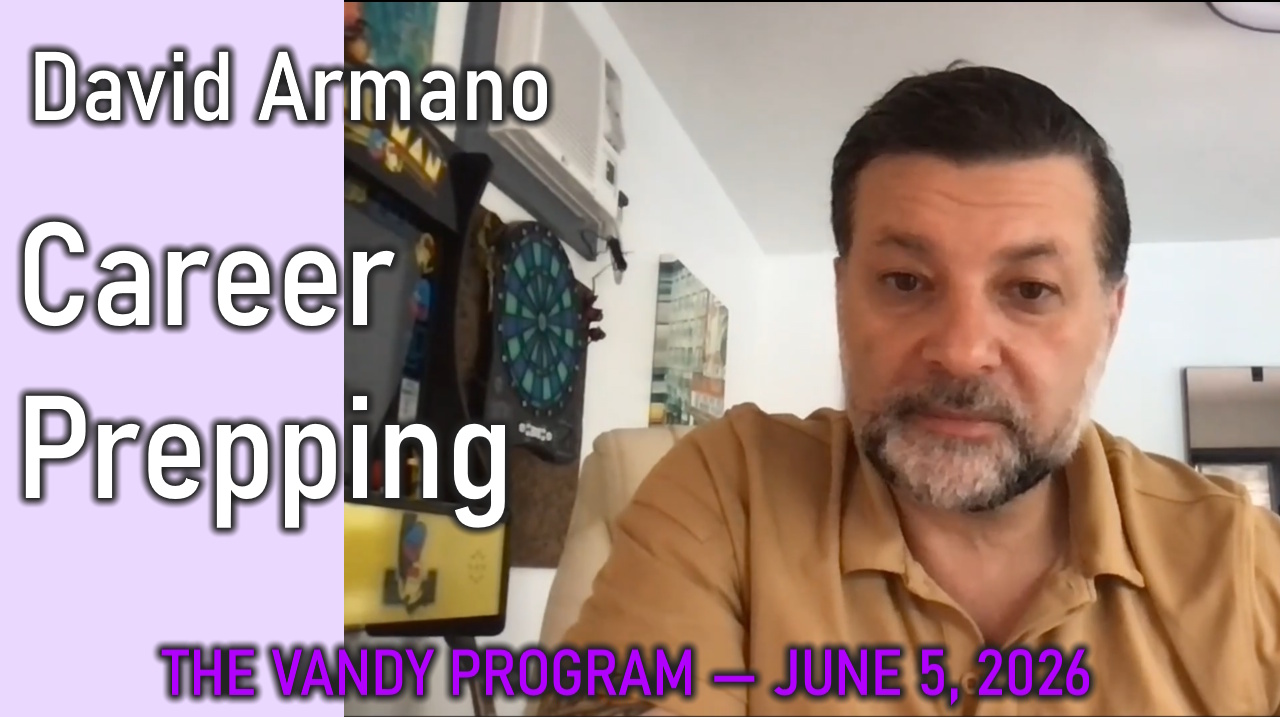
David Armano was my guest on a recent episode of The Vandy Program, and he pulled no punches when talking about where things are going. Some highlights from our conversation: Get Used to Working with Agents Not talent agents, of course, but AI agents. This will make us more efficient, but also lonelier. You used…
-
Baby Steps, Tiny Victories, And Staying Positive

It’s another “Month of Content” here for me, Dave, here on the blog, on my YouTube channel, and on my Substack. Do I have all the answers? No. Will I keep at it in a quest to find the answers? Yes. Here are a few thoughts… The Baby Steps? We’re all neophytes at SOMETHING. With…
-
Three Recent Vandy Program Interviews

Back in December 2025, I decided to post content each day; between this blog, my Substack, LinkedIn, YouTube, and X, the plan was something every day. It was a fun experiment and…I figured June 2026 was a good enough time to do that again. So here goes; it’s June 1 and time to take a…
-
Requiem For A Show
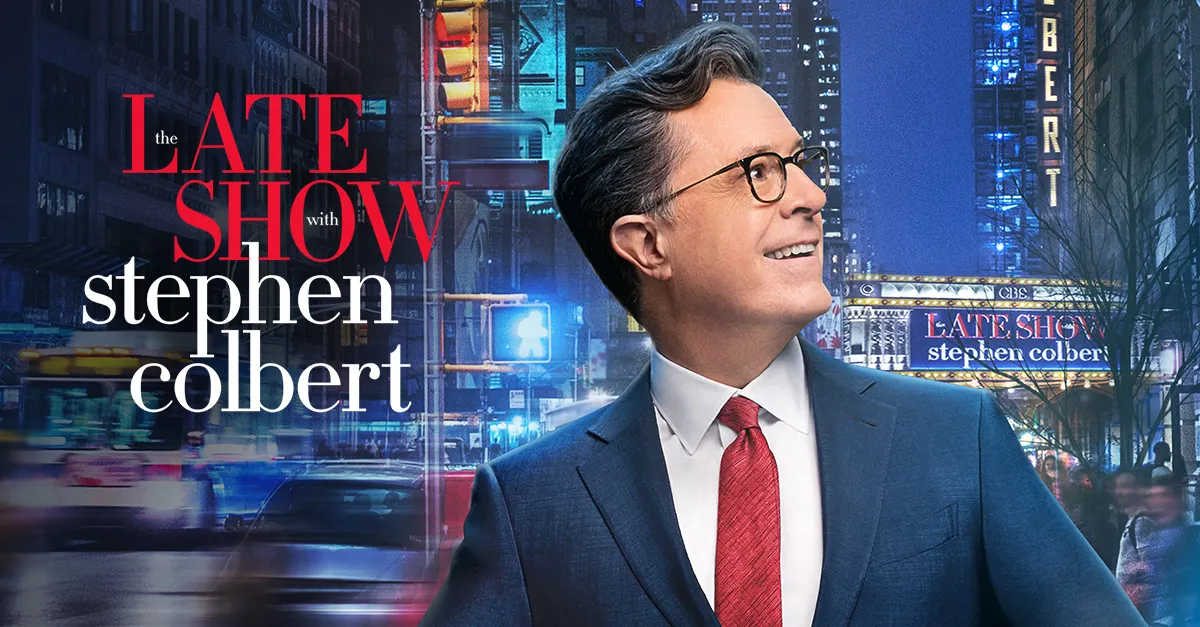
It’s official: The Late Show with Stephen Colbert is off the air. It wrapped its final show on Thursday, May 21, 2026. And, in keeping with tradition, I didn’t watch. I first wrote about the show’s demise on my Substack last year. It was then, is now, and ever shall be…a business decision. Don’t cry…
-
Understand Your Personality and Activate Growth Mode

Three new Moleskine knock-offs arrived on Sunday. One’s teal, one’s a dark blueish-green, one’s magenta. (At least that’s my argument; you may disagree based on your interpretation of the below photo.) Alas, they’re here and I plan on using them. Much has been said about the benefits of writing things down; I’ve talked about it…
-
Sharing Some Recent Interviews on The Vandy Program

Hello there! I recently read that, of the estimated 4.5 million podcasts in the world, only 300,000 have released a new episode in the past 30 days. Since I’ve aimed for Systems Over Goals, especially here in 2026, I thought I’d point to not 1, not 2, but 3 recent podcast interviews. So I’m in…
-
31 Days of Content: Here’s What I Learned
On December 1, I vowed to share content every day for a month. Here, on Day 31, I look back at what I’ve learned. First Up: ‘The What’ The content I shared — for the first 30 days, not counting today — fell into three categories: Next: ‘The Where’ 25 of the 30 posts were…
-
Just How Vulnerable?
Is 2026 going to be The Year of Vulnerability? If so, we probably need to set some ground rules. When someone is “in the soup,” they are in trouble. Trouble of some sort, trouble that may or may not be with a capital “T;” You may or may not want or need to know exactly…
-
The Best Long-Form Videos of 2025
As I plan for 2026, one of the things I want to do is conduct more long-form interviews on YouTube. As a result, I’ve spent much of the year — and especially the last three months — watching a ton of long-form interviews. I’ve got a few favorite interviewers: folks who put together a combination…
-
Systems Over Goals; And New Year’s Resolutions
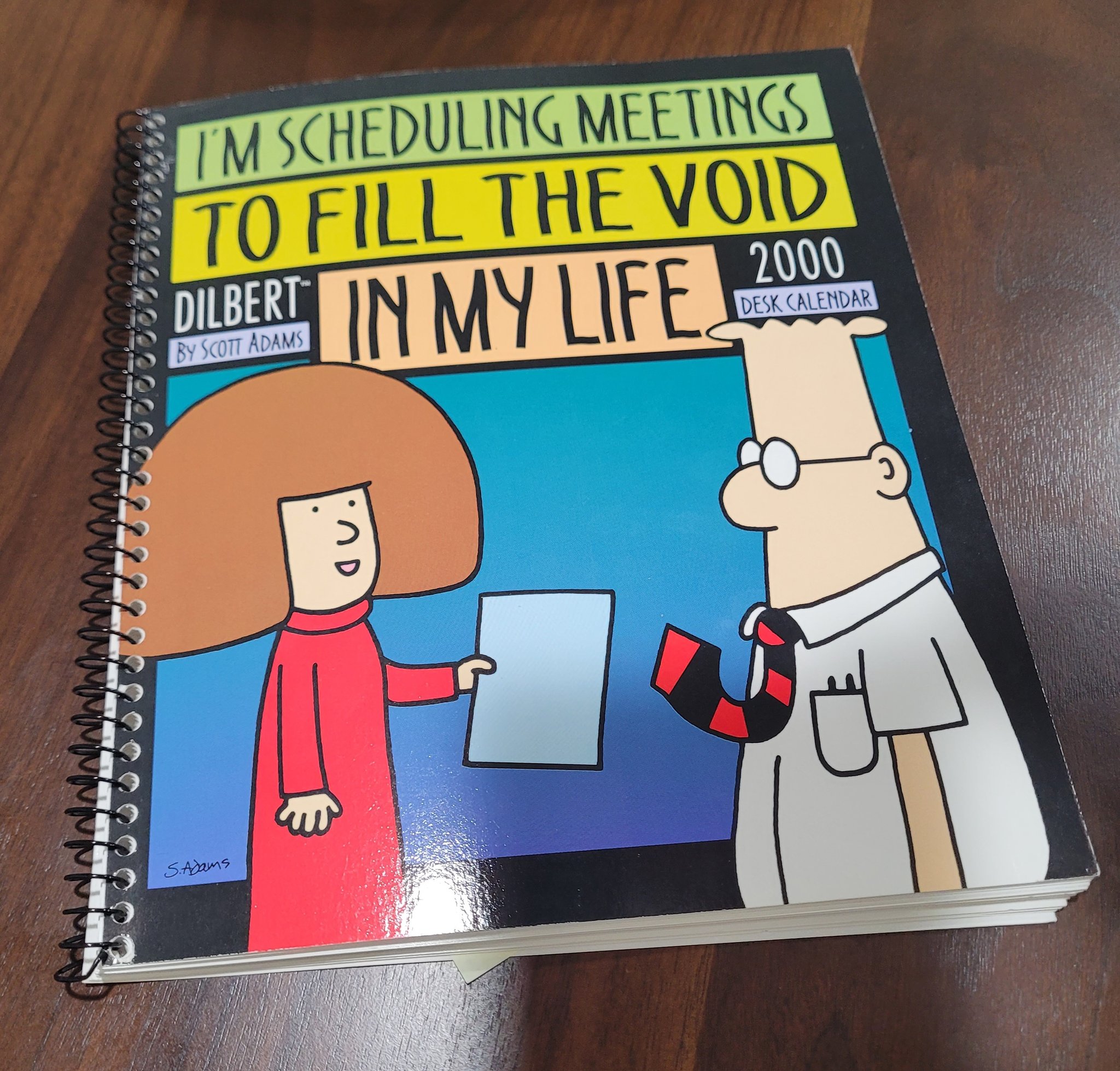
I’ve followed the work of Scott Adams for years. Decades, actually; as I just found this calendar in a box of stuff I’ve kept. Flipping through it is actually quite illuminating, as 2000 marked the start of a six-year run at a large insurance brokerage (and human capital consultant) that you’ve heard of. And it’s…
-
What Is ‘Price’s Law’?
This post originally appeared on Dave’s Substack in March 2024. It has been lightly edited and updated. If you’ve been anywhere around business or business books or hustle culture or anything related to GSD (“Getting Stuff Done”) at work, you’ve heard of the Pareto Principle. The 80/20 Rule. 80 percent of [THING] will come from…
-
The Best Musical Performances from The Late Show with David Letterman

We’re talking music on the blog today. Give this Gen-Xer a chance to get nostalgic for a bit, please. There is no question in my mind that David Letterman was loads better than his competition at getting the best musical guests on his show. No question. Most of this was because of Paul Shaffer, the…
-
The Christmas Message

It’s Christmas 2025. In Bethlehem, the birthplace of Christ, things are returning to normal this year. The past two Christmases, there were no traditional processions, no celebrations of Christmas; the Hamas attacks of October 7, 2023 made that impossible. War continued. Christians, who are in the minority even in Bethlehem itself, would celebrate Christmas quietly.…
-
On Christmas Eve

Growing up in Northern Indiana, our Christmas Eve tradition was rather simple. We rotated each year between Grandma’s, Aunt Dorothy’s, and our house. Roll in at around 3 or so and have food and drink and make merry and all that. It was a great tradition that, in retrospect, we were blessed to have; with…
-
GEO vs. SEO — A Primer for Marketers

Welcome to the new world of marketing and public relations. Out with tradition and in with…machines? We’ve had a few tongue-in-cheek posts here about using Artificial Intelligence for good and not evil. And we have also had some fun with it, at least when we decided to generate really absurd images. But AI is everywhere…
-
Songs You May Have Missed in 2025

Yes, I listen to a ton of new music. And I talk about it here. There was the Top 5 Songs post. And Songs 6-13. And Songs 14-20. Plus there were the Next Big Things that I posited a guess about. In any event, there’s likely something that I missed. Or a few somethings. Here…
-
What To Read
It’s Sunday, and I’m continuing the streak in my Month of Content…Here’s Day 21. In yesterday’s edition of The Saturday List on my Substack — that’s where I share what I’m “Watching, Reading, Listening to, and Rediscovering” — the “Reading” section included my friend Megy Karydes‘s book, 50 Ways to More Calm, Less Stress. As…
-
Another Podcast Interview?

Yes, I sat down with Stephen Barrigar — he of the Substack called The Velcro Staircase — and yes I am continuing my content streak today by posting the entire hour-plus conversation. We talk about A TON of stuff:
-
Create Against The Machines
Editor’s Note: This post originally appeared on my Substack in February 2025 To say that I have a favorite poem might be a bit of a stretch; I loved my lone college poetry class at Syracuse, but wouldn’t call myself a devotee of the genre. Alas, if pressed while at whatever passes for an Algonquin Round…
-
Top 20 Songs of 2025
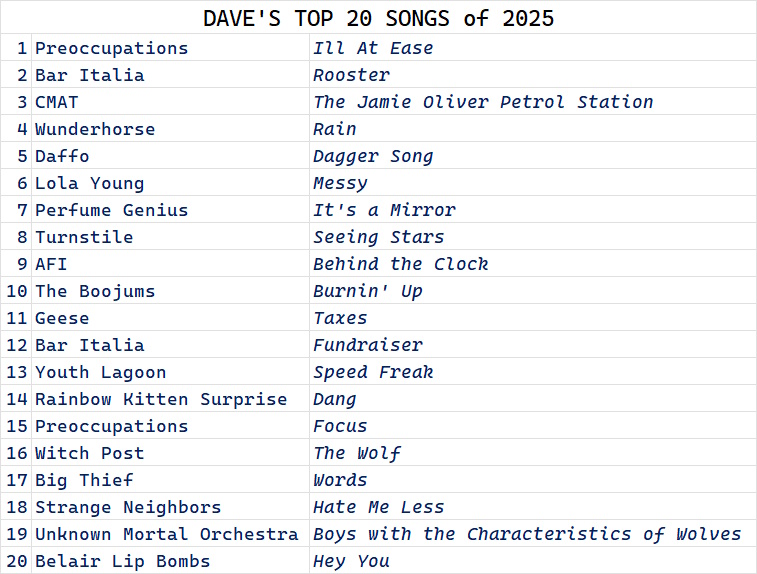
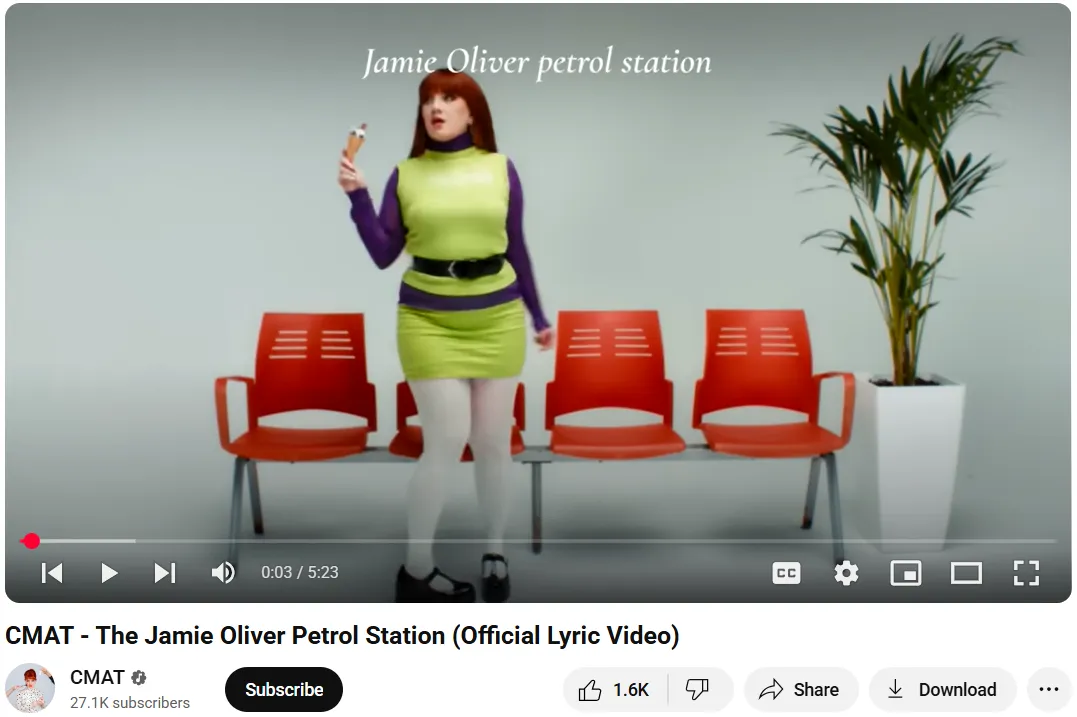
Superthread of all 20. 1. Preoccupations, “Ill at Ease” 2. Bar Italia, “Rooster” 3. CMAT, “The Jamie Oliver Petrol Station” 4. Wunderhorse, “Rain” 5. Daffo, “Dagger Song” 6. Lola Young, “Messy” 7. Perfume Genius, “It’s A Mirror” 8. Turnstile, “Seein’ Stars” 9. AFI, “Behind The Clock” 10. The Boojums, “Burnin’ Up” 11. Geese, “Taxes” 12.…
-
Why An Eight-Minute Episode of Bluey Might Change Your Life
Okay, now that we have your attention… High praise continues to be heaped upon one particular episode of the television show Bluey. For instance: the website Romper says “Adults Are Obsessing…Because It’s Perfect.” It’s a show for children, so folks like me — whose kids are no longer in the target demo for children’s programming…
-
Want to Own The Narrative? Own The Room.
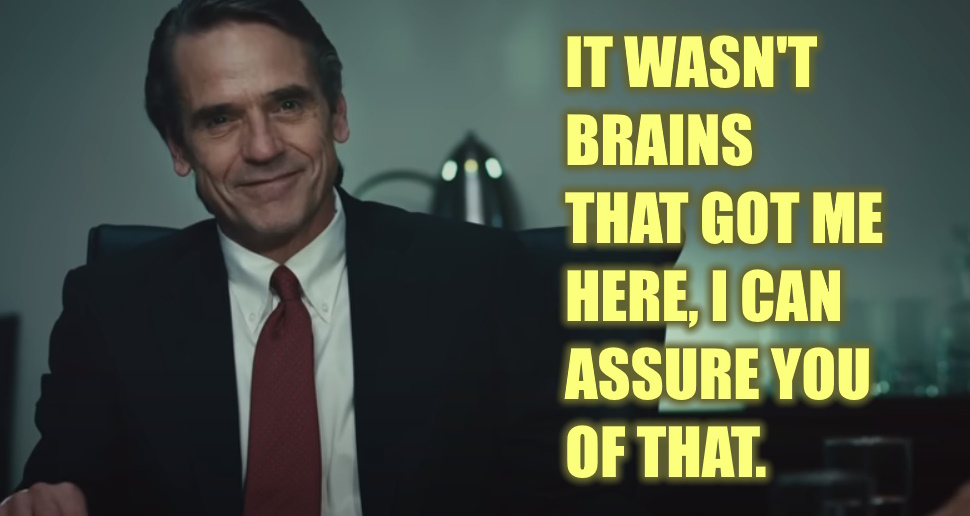
Editor’s Note: This originally ran in June 2024 on this blog and on Substack. Rewatching Global Financial Crisis Movies, and Replaying the Global Financial Crisis in Your Head I am blessed to work with, and know, a pretty age-diverse crowd. Which means a couple things: (1) I need to watch my “Cultural Literacy References” (e.g.,…
-
An Hour Well Spent

Trying something new on this particular Sunday — as we continue our month of content — by sending you in the direction of two outstanding interviewers and one S-tier guest. The interviewers: Konstantin Kisin and Francis Foster, co-hosts of the insanely popular Triggernometry podcast. The guest: Eric Weinstein. Probably the most “practically brilliant” thinker out…
-
Every Year’s Top Song Since 2020
According to Dave, at least. I’ve been blogging about all sorts of things for quite some time now, but the annual Top Songs list — which I’ve been doing both here and on Facebook and X — remains a personal favorite. AND it’s fun to compare my lists to others, especially those who blog about…
-
The Fifth Dentist and The Tenth Man

On reading the fine print, studying the scenarios, and thinking differently A year ago, I was working on a project and started wondering about The Fifth Dentist. You know, from the gum commercials. Ages ago, the idea took hold that “four out of five dentists recommend Trident,” a brand of sugarless chewing gum. Simple enough,…
-
Setting Yourself Up for 2026 Success

As we wind down 2025, and we keep on creating content in December, we look ahead at 2026. There’s going to be A LOT happening in 2026. No matter what your role is — Corporate Person? Independent? Small Agency Creative? Sales Leader? — it’s time to take stock of what you need for 2026. Let’s…
-
Top Five Songs of 2025
Last week, we started the countdown. You can see Songs 20-14 here. Then, yesterday, we gave you 13 on down to 6. Now, it’s time for the Top 5 Songs of 2025. Let’s dive in! 5. Daffo, “Dagger Song” I first heard this song in August on my way back from dropping a kid off…
-
Top Songs of 2025, Part Two
We’re back! It’s Part Two, so today’s post goes from 13 down to 6. The Top Five will come tomorrow. Let’s go! 13. Youth Lagoon, “Speed Freak” If you’re wondering who or what a Youth Lagoon is (or are), here’s a primer from Wikipedia: So that’s settled. In any event, Youth Lagoon brings it with…
-
It’s Sunday, So Here’s Advice from an Orthodox Priest — And A Couple Doctors, Too

Fr. Paul Truebenbach is an orthodox priest at Sts. Peter and Paul Orthodox Church in Salt Lake City, Utah. In this video, which appears on YouTube from a channel called Roots of Orthodoxy, Fr. Paul was asked if he had advice for someone with anxiety and depression. Even if you’re not a religious person, there’s…
-
The Top Songs of 2025, Part One

We’re back! Every year at about this time, we rank the songs we’ve heard — who’s kidding anyone, we’re using the “Royal We” here, as this is Dave’s ranking of the songs, according to Dave — and 2025 provided some…certified bangers. This year, we’ve expanded the list to include 20 songs. And today we’ll present…
-
The Next Big Thing — Or, Three Musical Acts About to Explode
We’re back on Day Three of A Month of Content…Here’s a post that appeared on Dave’s Substack this past June; it has been lightly edited with some editor’s notes updating statistics. It’s time to amaze your friends! Yes, thanks to yours truly listening to a lot of new music, a little sleuthing, and a chap…
-
Lean Into the Absurd with AI

We continue our Month-long content festival with a talk about AI and absurdity. The genie is out of the bottle when it comes to Artificial Intelligence. AI will change the world! AI will take our jobs! AI will cure cancer! All those things could eventually be true. But, starting a couple years ago, when I…
-
A Month of Content

It’s December 1. So I decided to issue a challenge to myself; and you can join in on the fun. The challenge: Create Content Every Day. Each day, for 31 days. The entire month of December. Throwing down a gauntlet. There’s really no catch here: come up with something new, repurpose something old. Remember, “systems…
-
The Saturday List – November 15, 2025

What I’m Watching, Reading, Listening to, and Rediscovering Watching: Two Shows With Buzz, The Chair Company and Pluribus In this case, I haven’t started either yet. No spoilers, please. And part of the mystery behind both shows is…the mystery behind both shows. In other words, I HAVE NO IDEA WHAT EITHER ONE IS ABOUT. Here’s the trailer for Pluribus.…
-
Songs of the Decade (So Far)
It’s time for one of those bars that show you how far along you are, you know, updating the virus scanner or something like that. Except…it’s time for that with the 2020s. Time, first off, for the disclaimer: I don’t care that there was no “Year Zero” and I also don’t care that the new…
-
Top Songs of 2024: Part Three (Songs 1-5)
Here they are: The Top Five Songs of 2024. This is the third year for these rankings from me; prior to that, I did post on Facebook, but 2022 and 2023 had lists and you can read them here: Your Top Ten Songs of 2022, Top Ten Songs of 2023. And, here are the links…
-
Top Songs of 2024: Part Two (Songs 6-10)
In Part One, we told you about the Honorable Mentions. Now, we crack the Top Ten with songs 6-10. But presented in reverse order because we grew up as the Casey Kasem generation. 10. Magdalena Bay, “Death and Romance” If you’re Gen X, you’ve no doubt picked up an album and, when you see a…
-
Top Songs of 2024: Part One (Honorable Mentions)
These are the Honorable Mentions: Songs outside the Top Ten but worthy of a listen. Let’s Go! Here’s 2024’s Year-End Fiesta of Music. We’re talking about songs released in 2024 that went from “worth a listen” to “earworm city” to “wow, this is amazing.” You should know that these picks are subjective as heck. A…
-
On Gender Differences, Being Dispassionate, and Meeting The Steel Man
“Facts don’t care about your feelings.” — Ben Shapiro Gotta be honest with ya, I love a good debate. It’s great to see two really smart people go toe-to-toe, each presenting facts and packaging them into convincing arguments that lead me to see both sides of an issue, and think differently about it when they’re…
-
Price’s Law; Or, Make Yourself Indispensable At Work
Remember Pareto’s Principle? He’s So 2006. If you’ve been anywhere around business or business books or hustle culture or anything related to GSD (“Getting Stuff Done”) at work, you’ve heard of the Pareto Principle. The 80/20 Rule. 80 percent of [THING] will come from 20 percent of [GROUP]. Simple, really: if you sell something, 80…
-
The Top Ten Songs of 2023
We’re counting them down, just like Casey Kasem. We’ve done this before — here’s a link to last year’s post: Top Ten Songs of 2022 — and we like to think we keep up with the trends, within reason. Please note a couple things from your friendly wannabe music critic: Before we hit the Top…
-
A Holiday Blog Post About AI Strategy for Marketers
Your holiday season would not be complete without an obligatory blog post that tells you how artificial intelligence can make your holiday marketing and PR content better. That’s right, there’s no sense in doing everything yourself. Automate! Use AI! For instance, you could go to Bard, like I just did, and type in a prompt…
-
Breaking Down the Band: Three Fans Talk About The Best Shows, Albums, and Songs from Oasis, Radiohead, and Pearl Jam

As I was getting ready for Pearl Jam Week in Chicago, a couple things dawned on me. One: I’ve seen this band more often than any other band (north of ten times, lost count). Two: I have opinions. So I thought I would take to the keyboard and throw down a few opinions. Then I…
-
Your Top Ten Songs of 2022
There used to be a record store on the North Side of Chicago — and we’re talking actual “North Side” in that it was on Ridge Avenue and not far from a neighborhood called West Ridge and in an uber-ethnic area that was next to another uber-ethnic area — that never changed the letters in…
-
Why Rolling Stone’s List of Greatest Songs Ever Doesn’t Suck
One of the great maxims of my life has been the following: “Trust your gut, but DON’T conflate your initial reaction with your gut reaction.” E.g. you meet someone at first and you’re thrown off by something; then you realize that your initial reaction — “hey, this dude is over the top crazy!” — morphs…
-
Why This Blog Came Back
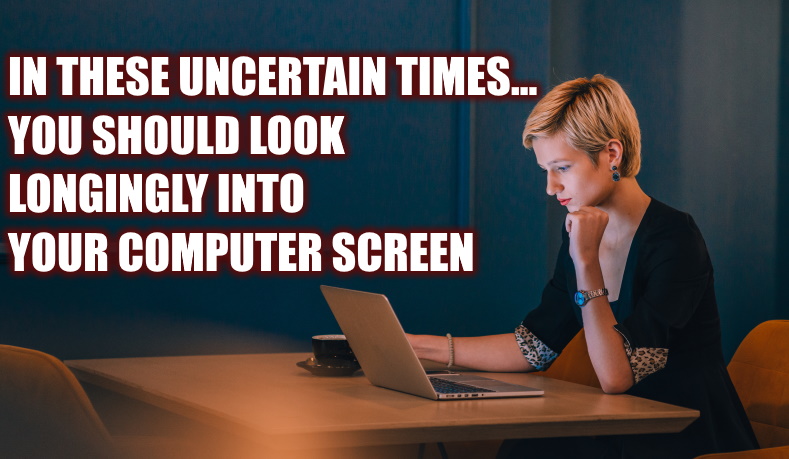
“In These Uncertain Times…” That, it seems, is how just about every brand ad begins during the coronavirus slowdown. “The Great Pause” is what some pundits are starting to call it; as opposed to being “The Pause That Refreshes,” it’s “The Pause That’s Uncertain.” Nobody knows what’s next, nobody knows where it’s going, nobody knows…